MAKING SPACE
Exploring Agency, Meaning-Making and Calm Following Trauma Through Textile Practice
This project explores how textile making can create opportunities for calm, agency and meaning-making following trauma, particularly when verbal expression is difficult or unavailable.
Through material exploration and textile practice, I investigate how the physical act of making can provide a way to express, process and make meaning beyond words. I am interested in how working with materials, making decisions and allowing a piece to develop can create space for reflection, a sense of control and new ways of expressing experience.
ABSTRACT
Making Space explores how textile practice can create opportunities for calm, agency, meaning-making and non-verbal expression following trauma, particularly when words are difficult to find. This wearable-art collection developed from my experience of machine knitting in 2024, when concentrating on stitches, yarn and the growing textile offered calm and distance from the fear and rumination associated with domestic violence.
The Honours thesis investigates making through practice-led, retrospective and reflective research, examining textile artefacts and documentation alongside reflections and literature. Its findings suggest that concentration, creative agency and meaning-making can emerge through the act of making, extending beyond the completed artefact. The Honours project explores these possibilities in six wearable-art pieces: Trauma, Meaning, Calm, Agency, Liberation and Voice.
Through machine knitting, crochet, felting, weaving, embroidery, beading, hand stitching and material manipulation, I investigate structure, texture, colour and form. Inspired by the colours and lines of kilts, tartan is reinterpreted through vertical and horizontal structures before the final piece moves towards texture and volume. Together, the works form a non-verbal narrative about experience and expression. The project does not claim that textile making heals trauma; rather, it considers how making can create space for calm, agency, reflection and communication beyond words.
PROJECT ORIGINS
Making Space has its beginnings in a university assignment I undertook in 2024. At the time, I was exploring textile making in the context of my own experience of domestic violence and its ongoing impact. I found that concentrating on the needles, yarn and growing textile while machine knitting created a sense of calm and temporarily overtook the fear and rumination I was experiencing. The physical act of making gave me something tangible to focus on and a space away from those thoughts.
This experience made me curious about what it is about the act of textile making that can create a sense of calm, agency or meaning following trauma, particularly when verbal expression is difficult or unavailable. It became the starting point for my Honours research. I wanted to use my voice, but not with words.
The initial visual inspiration for the project came from my British friend Malachi and the tartan kilts he regularly wears. I was drawn to the way he expresses his British heritage and identity through clothing, particularly the colours blue, white and red. These colours became the starting point for my own exploration of tartan. Rather than reproducing traditional patterns, I began experimenting with the interplay of vertical and horizontal lines through different textile structures, textures and material manipulation. This allowed me to reinterpret tartan through my own textile practice.
What is it about the act of textile making that can create a sense of calm, agency or meaning following trauma when verbal expression is difficult or unavailable?
RESEARCH APPROACH
Making Space uses a practice-led research approach, bringing together critical literature, reflective practice and textile experimentation. Through machine knitting, beading, embroidery, crochet, felting, hand stitching and material exploration, I investigate how the physical act of making can offer a means of expression beyond words.
The research explores the relationship between material processes and embodied experience, and how textile practice can create opportunities for agency, meaning-making and recovery.
FROM RESEARCH TO MAKING
The research is translated into six wearable-art pieces: Trauma, Meaning, Calm, Agency, Liberation and Voice. Each explores a different aspect of my experience and the relationship between textile practice, material decisions and personal expression.
Developed through machine knitting, felting, crochet, hand stitching, beading and material experimentation, the pieces reflect different approaches to making — from working within a prescribed pattern to developing intuitively, observing, altering and making independent choices.
Together, the six works form a non-verbal narrative. Through knitted structures, layered and folded surfaces, stitching, colour and texture, I explore how textile making can communicate experiences and ideas that can be difficult to express through words alone.
TRAUMA
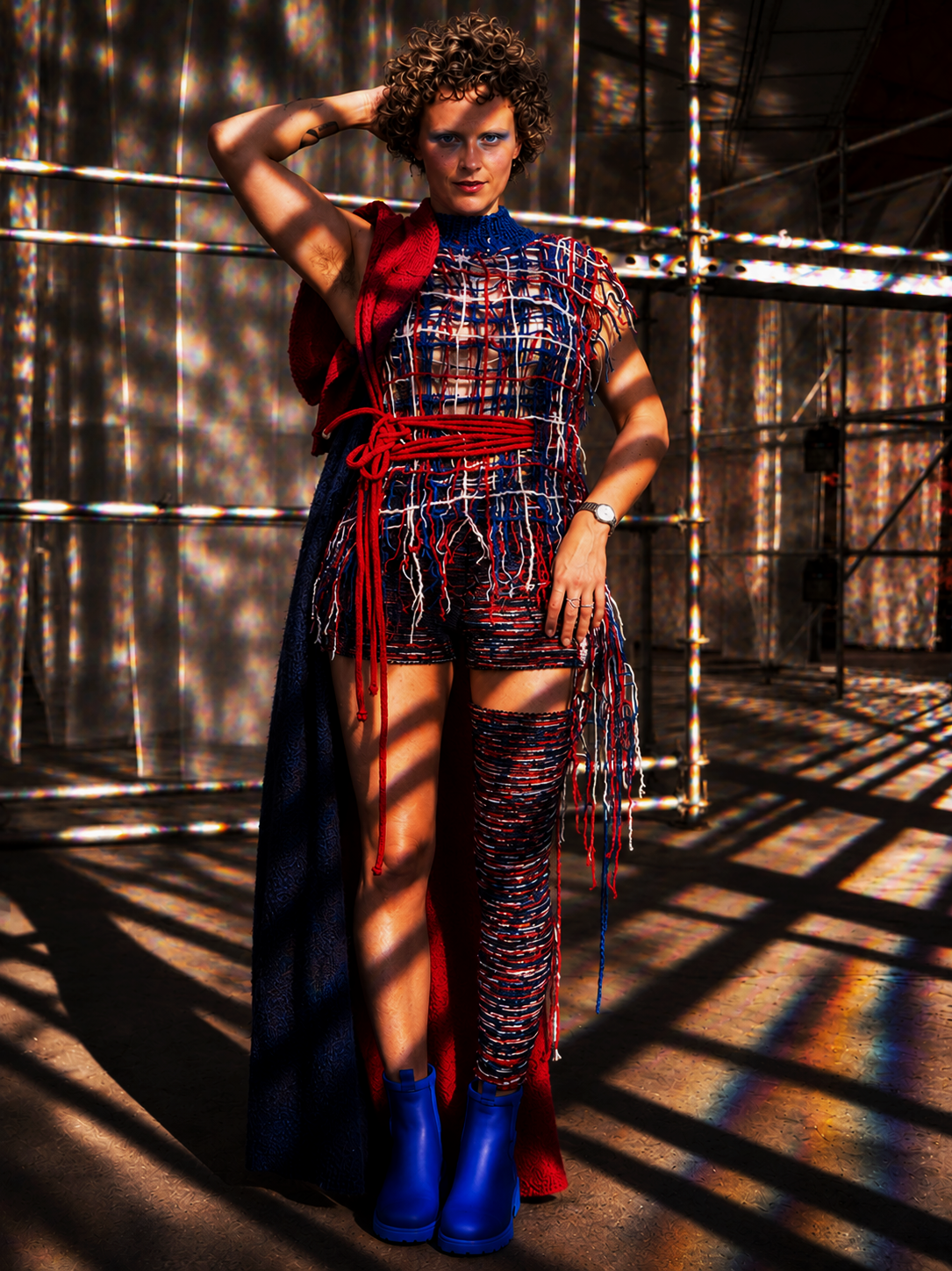
Trauma explores the experience of disruption, constraint and the struggle to regain control. The piece reflects how trauma can impose structures and limitations that feel beyond our control, shaping the way we experience ourselves and the world around us. I used a commercial pattern to determine the shape and construction of the knitted shorts before making began. Unlike the more intuitive development of the other pieces, this process followed a prescribed structure, leaving less room for spontaneity or personal direction. For me, this reflects the tension between the constraints imposed by traumatic experience and the desire to reclaim a sense of agency.
MEANING
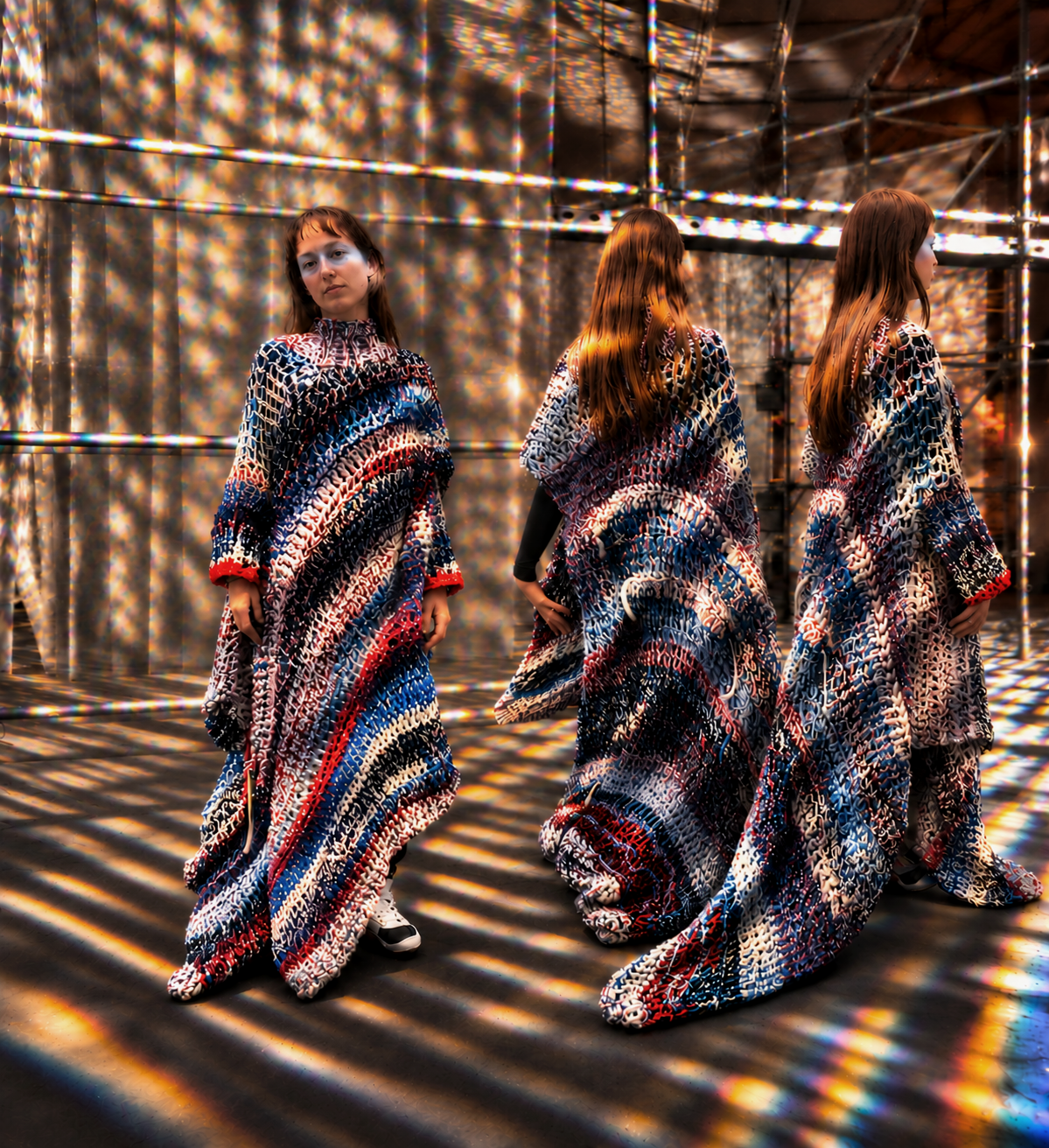
Meaning explores how we make sense of experience through the act of making. The piece began without a predetermined plan, allowing its form and direction to emerge through the process. As I worked, I made decisions about colour, texture, scale and structure, blending different yarns and working between crochet and knitting. Each choice influenced what came next, creating a process of continual discovery and reinterpretation. For me, meaning-making is not necessarily about finding a fixed explanation or arriving at a particular outcome. It can be an ongoing process of exploring, responding and creating connections, where meaning emerges through the act of making itself.
CALM
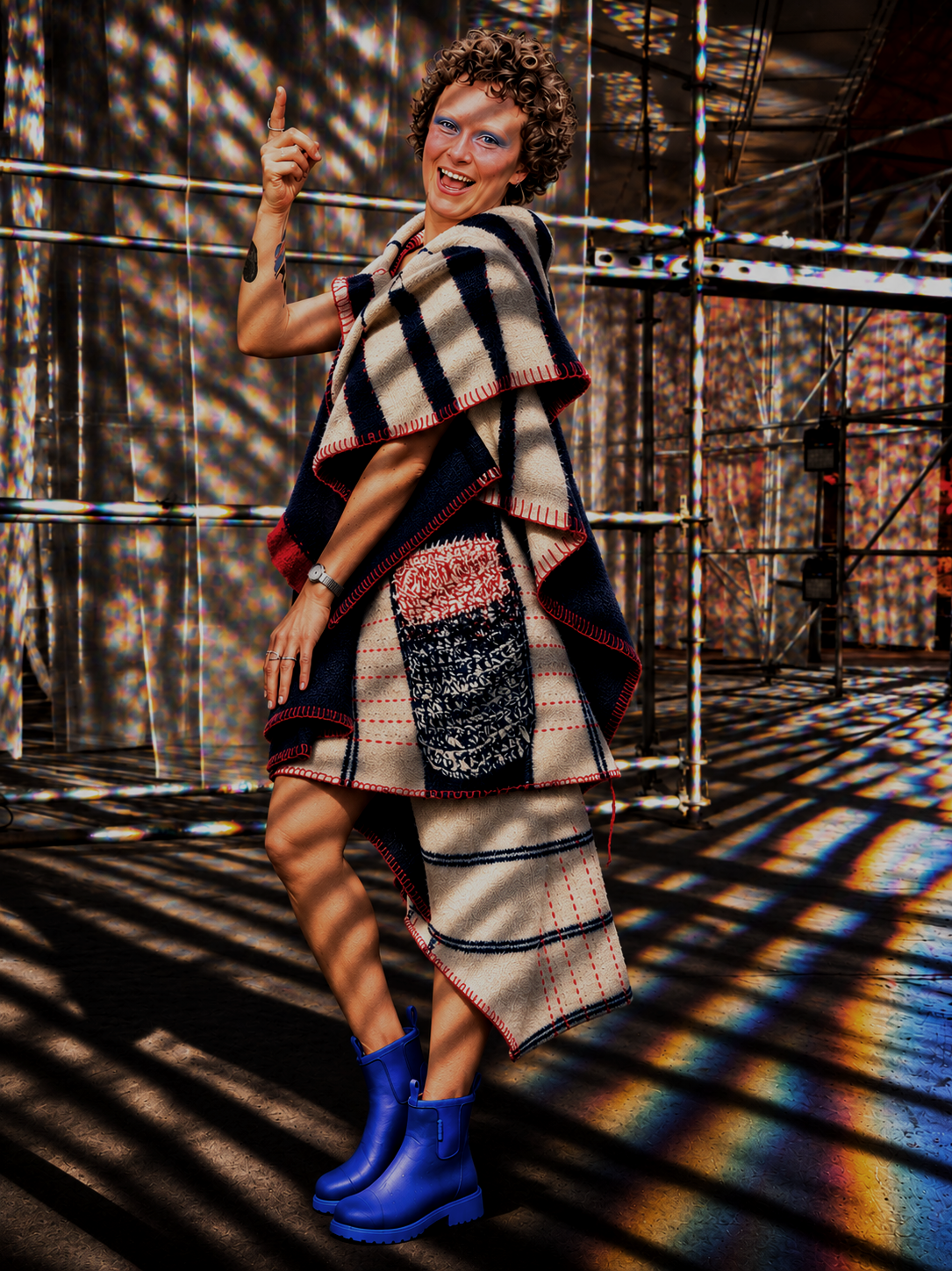
Calm explores the possibility of finding stillness through the act of making. Rather than working towards a predetermined outcome, I allowed myself time to observe, reflect and respond to the developing textile. When the white surface began to feel overwhelming, I introduced light blue and red stitching to create a sense of balance.
For me, calm is not the absence of activity or thought, but the space to pause, pay attention and respond without urgency. It is an experience of finding moments of stillness within the process of making.
AGENCY
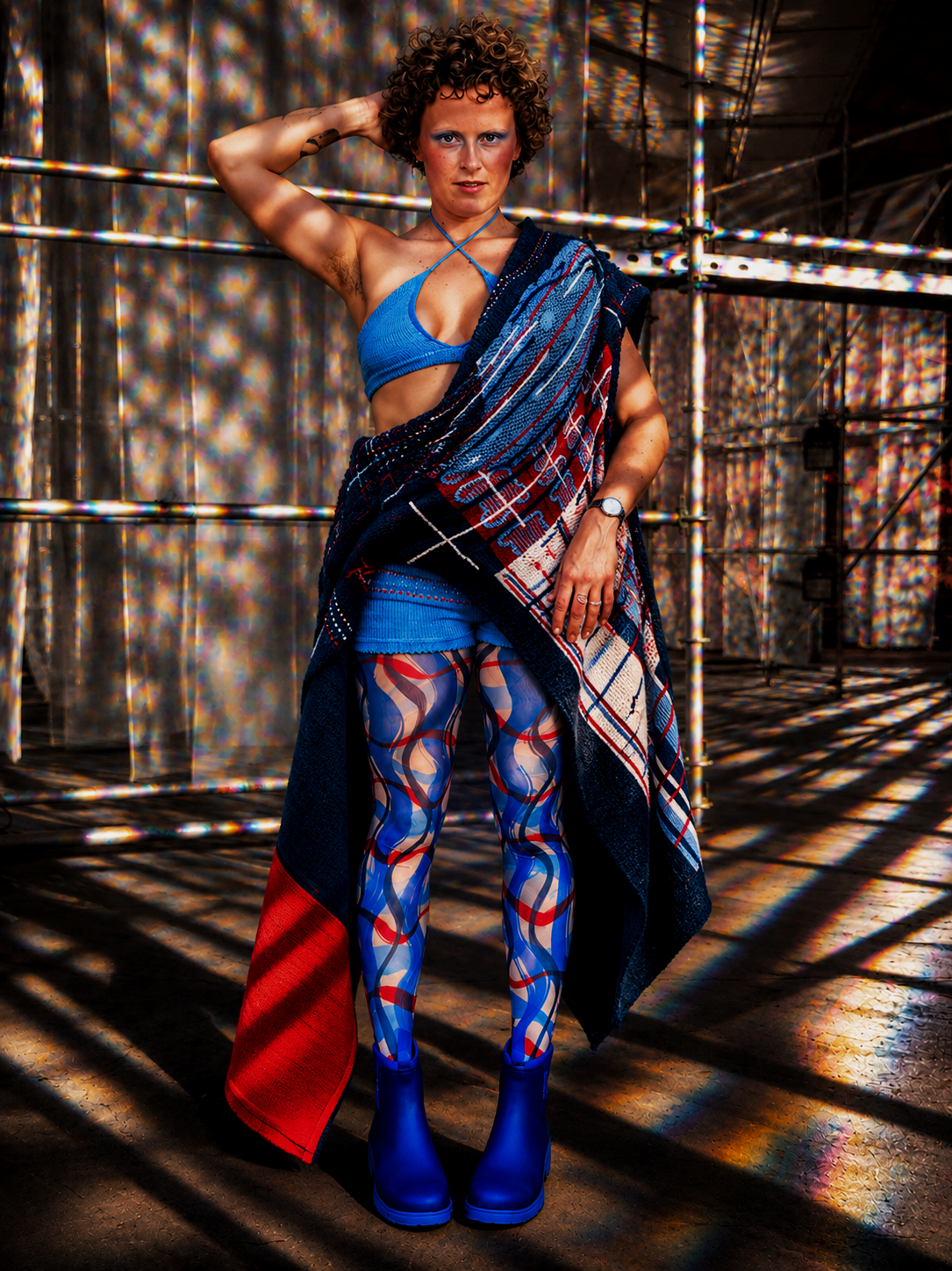
Agency explores the freedom to make my own decisions, without feeling bound by expectations or self-imposed rules. My original intention was to create the entire collection using textiles I had made myself, without incorporating pre-made fabrics. However, when developing this piece, I questioned that restriction: says who? I decided to incorporate denim and red canvas, alongside my own machine-knitted punchcard panels and Sashiko hand stitching, simply because I could. There was no one dictating what the work should be or how it should be made. I was free to make that decision because it was mine to make. For me, this is agency: recognising that I have the autonomy to determine my own direction, challenge expectations and make choices on my own terms.
LIBERATION
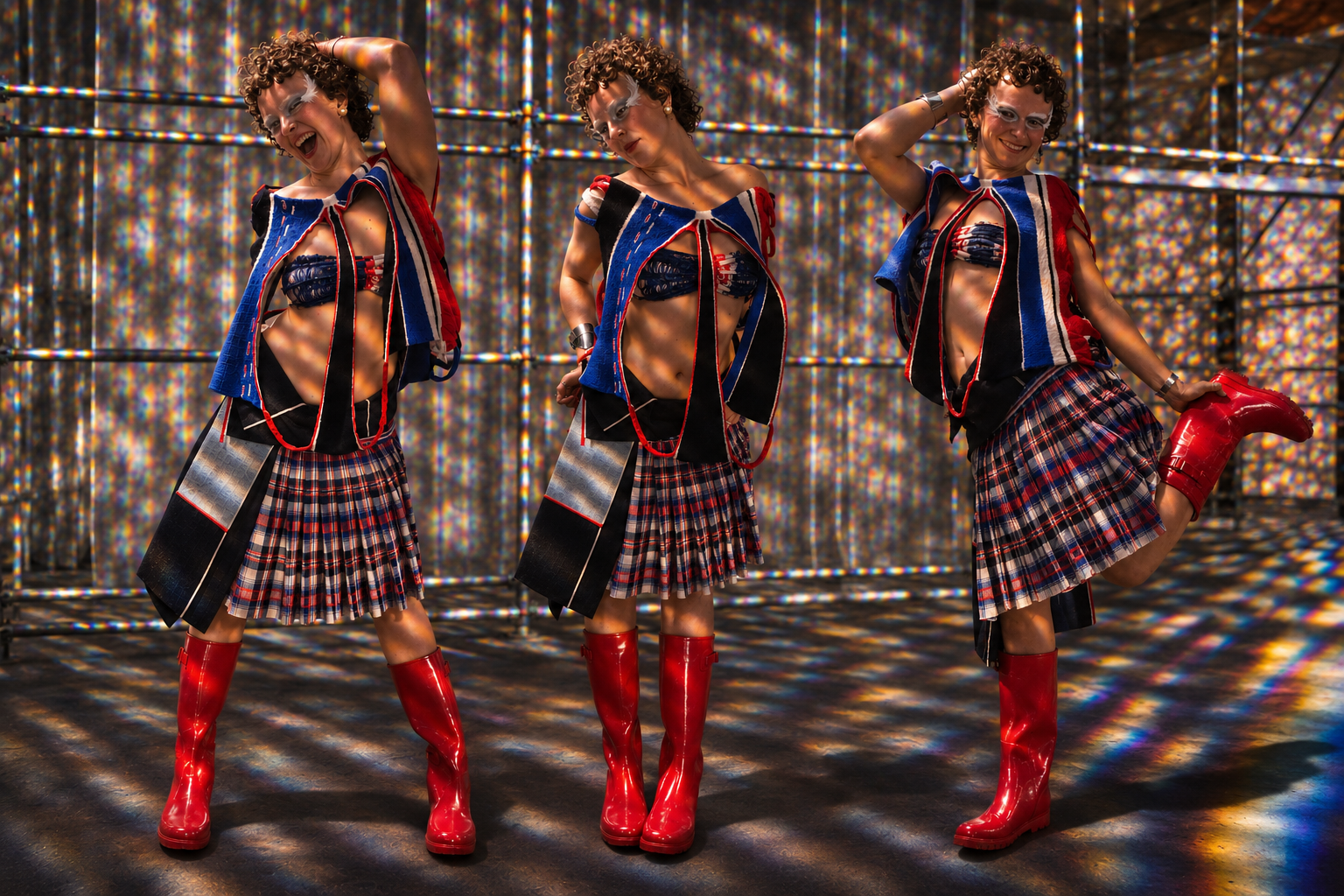
Liberation explores the freedom I experienced through the act of making. During periods when my thoughts were consumed by the rumination associated with domestic violence, textile practice offered space away from those thoughts. The physical engagement of working with materials allowed me to redirect my attention towards something tangible and within my control.
Combining machine knitting and felting with vintage tartan, beading and selvedge denim, the piece reflects this experience of reclaiming space through making. For me, liberation was not about forgetting or resolving what had happened, but finding moments of autonomy, possibility and freedom on my own terms.
VOICE
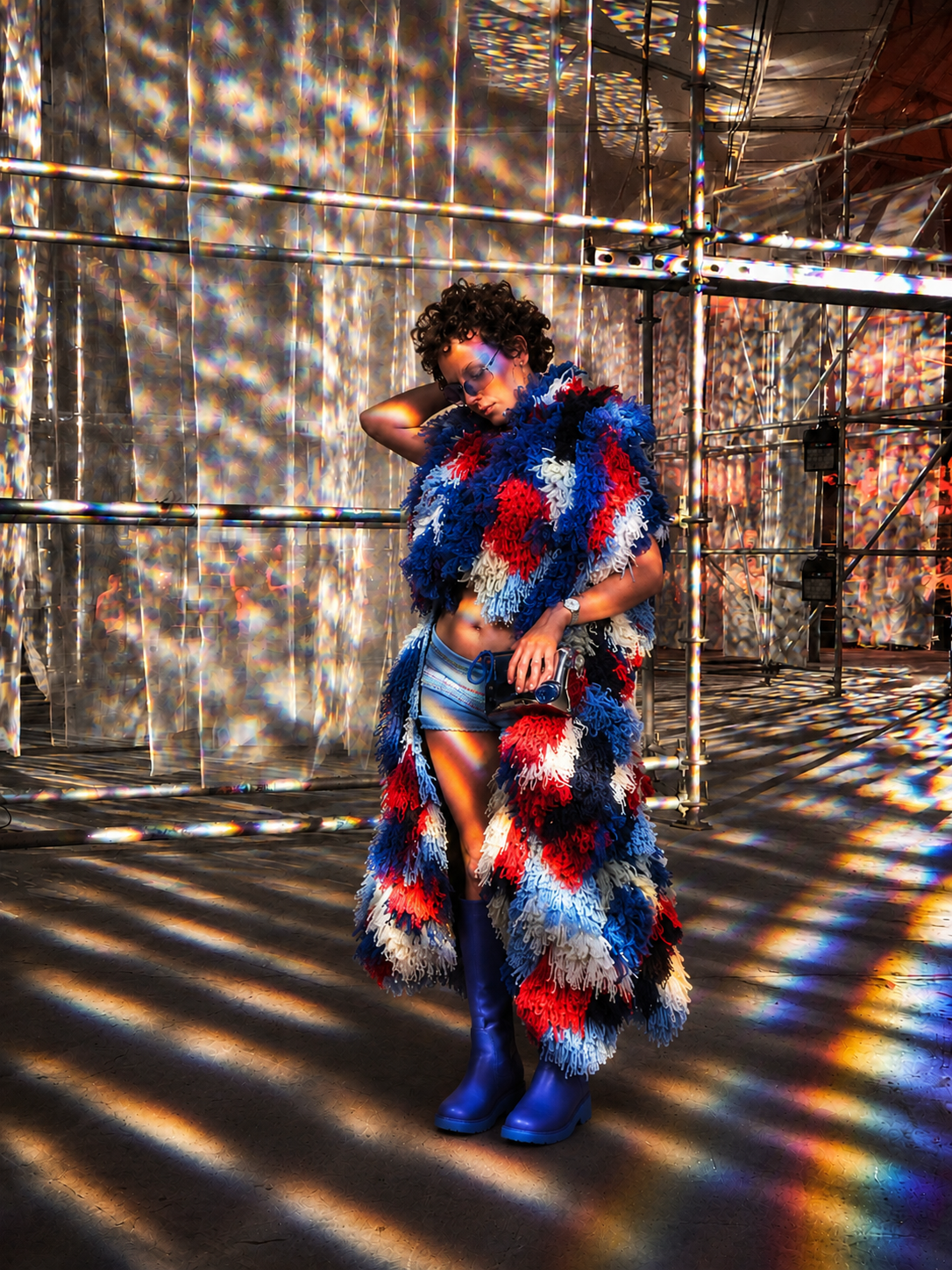
Voice is about finding a way to express what I have struggled to put into words. I wanted this final piece to move beyond the structure of the preceding Looks, shifting away from the vertical and horizontal lines of tartan towards texture, volume and a more expressive use of the textile itself. I wanted to use my voice, but not with words. Through the material, I could communicate something that felt difficult to articulate verbally. For me, Voice is about being heard without having to speak, and recognising that expression does not need to be spoken to be powerful. It is my way of saying something, on my own terms.